
Connecticut Property Tax Offices and Records
Connecticut divides property tax records between two local officers. The municipal assessor sets values. The tax collector issues bills and tracks payments. The Office of Policy and Management (OPM) maintains directories pointing to local assessors, but assessment and taxation remain municipal functions; OPM never replaces a town's judgment or account system. So begin with the town or consolidated city-town that governs the parcel. A county office is the wrong door. The OPM municipal assessor directory identifies the right assessor, and the town's tax collector page handles bills, payments, delinquency, and current balances.
| Field | What It Shows | Where |
|---|---|---|
| Grand-list assessment | Land, improvements, total assessment, classification, and the list or valuation year, as exposed locally | Municipal assessor |
| Exemption or use-value entry | Relief or special valuation displayed for the parcel; availability and labels vary by town | Municipal assessor |
| Tax bill | Tax year, installment, amount billed, due date, and account or parcel reference | Municipal tax collector |
| Payment and balance | Payment status, remaining balance, and interest shown at the time of lookup | Collector portal or office |
| Tax lien or release | Recorded lien instrument and later release, if one was filed | Tax collector and town clerk land records |
The assessment is the assessor's tax-roll figure. The bill is the collector's account calculation. Under CGS § 12-62a, Connecticut assessments generally equal 70 percent of present true and actual, or fair-market, value. The mill rate applied to the taxable assessment produces the bill. A municipality may phase in a change or show special treatment. State law also bars an assessment from moving solely because of one sale price, under § 12-63d. So the last transaction does not automatically reset the card.
A municipal bill can change after a payment, correction, interest accrual, or installment posts. Record the date of your lookup. A lien entry is another record. The collector reports what is due. The town clerk holds recorded land instruments. These Connecticut sources answer different questions even when they share a parcel number.
The assessor and collector may also use different account identifiers or display the parcel differently. Match the municipality, situs address, parcel key, grand-list year, and bill year. Do that before treating two screens as one record. An assessment card explains the valuation base; a bill explains the account charge. Neither alone proves current title or the release of an encumbrance. For those distinctions, see Connecticut property value records.
Connecticut’s October 1 Assessment Snapshot
Connecticut fixes October 1 as its uniform assessment date under Chapter 203. An assessment attaches to one grand list year. It is not a live repricing whenever a buyer makes an offer. Nor does it update whenever a building changes. The property-assessment statutes set the statewide framework. Each municipality keeps its own list and notices. When comparing assessment records, write the year and valuation date beside every number. That habit keeps an older card from being mistaken for a current assessment.
The card may split value into land and improvements. Then it shows a total assessed figure and property class. Some municipal systems add a market estimate, exemptions, a sale reference, or a parcel identifier. Not every town exposes the same fields. A blank or oddly named field belongs to that assessor, not to a statewide definition.
Connecticut Property Tax Revaluation and Phase-In
OPM's municipal revaluation schedule lists each town's revaluation dates. Revaluation is generally required at least every five years. A municipality may phase in an increase for up to five years under CGS § 12-62c. During a phase-in, the assessment can sit below 70 percent of the new revalued fair-market figure. The date and treatment on the local card matter. Never assume every Connecticut town changed values at the same time.
For a statewide picture, use the OPM list to find the municipality. Then compare the effective grand-list year on the assessor's notice or parcel card. A schedule entry says nothing about a phase-in. It skips which year applies to a given property. Nor does it show whether a card has since been corrected. Those details live in the local assessor's records.
Looking Up Connecticut Property Tax Bills
Use the tax collector's official portal. If no lookup exists, contact the municipal office. Newington's Revenue and Tax Collector page documents searches by name, property location, bill number, unique ID, or list number. Norwalk's tax collector page offers property-location or parcel searches and explains which grand list its July bills reflect. These are local examples. They are not a promise that every Connecticut town shares one vendor or set of fields.
- Confirm the legal municipality from the property record, since a postal place name or ZIP alone does not establish the taxing town.
- Open that town’s official tax collector page and search with the address, parcel/account key, or bill number the portal accepts.
- Read the tax year, installment, due date, posted payments, and balance; save the page or report date because balances can change.
- If delinquency matters, ask the collector about the current account and search the town clerk’s land records separately for a recorded lien or release.
Keep the bill number handy along with the situs address. Both help when a search returns several near matches. Most Connecticut real-estate bills come due July 1 under the general cycle. Installment schedules differ from town to town. Norwalk's page notes the grand-list year behind its July bills. Newington's search options illustrate how one town structures its lookups.
A portal might offer a detail view, a PDF, or a summary report. Payment vendors often add their own service charge. Check the town's payment page before submitting money. Remember that an online amount due is a moment-in-time account view. It is not proof that a land-record lien has been discharged.
- Assessed value
- The assessor’s valuation used in the local tax calculation, subject to the assessment rules and any phase-in or special treatment.
- Mill rate
- The local rate applied to taxable assessment to calculate a bill; consult the current municipal figure rather than reusing an old rate.
- Exemption
- A statutory or local reduction displayed on an eligible record when the municipality has applied it; do not assume a category appears on every card.
- Tax lien
- A recorded municipal claim for unpaid tax. Confirm the balance with the collector and the instrument or release with the town clerk.
The Norwalk bill page is shown here. Its address and parcel route reaches a local account rather than a statewide roll.
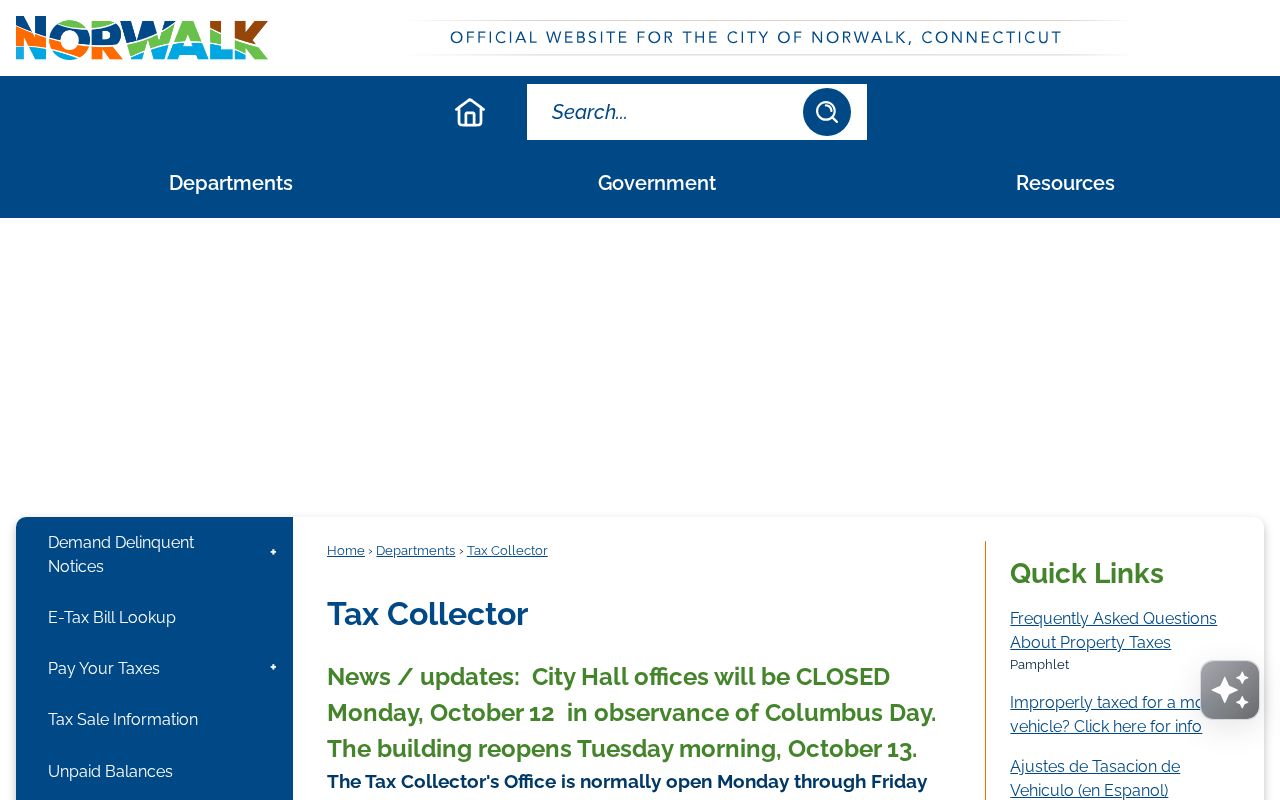
Note the bill year and balance date on display. Comparing this Connecticut account with an assessor card or a later collector response only works when those dates line up.
Connecticut Collector Search Fields
Search labels mirror local account systems. Pick the field that best fits what you already have. Newington offers the broader example; Norwalk documents its address and parcel routes. The search key just locates the account. It cannot confirm that the assessor value equals a market appraisal. Nor can it prove a displayed balance was still unpaid after the screen loaded.
| Portal field | What to enter or capture | Why it helps |
|---|---|---|
| Property location | Municipal situs address in the town’s format | Connects the account to the parcel being researched |
| Parcel or list number | Exact local account, unique ID, or list number where accepted | Reduces ambiguity between similar street addresses |
| Bill number | Identifier printed on a bill or notice | Targets a particular tax account or billing item |
| Tax year and installment | Year and payment period shown in the result | Prevents an older bill from being read as the current balance |
Newington's page describes detail, PDF, and summary views. Norwalk explains the grand-list year driving its bill cycle. Neither town should be read as a universal Connecticut field inventory. A lookup may return many records. It may return none. Either way, call for the collector's published contact route, with the parcel or bill reference already identified through the assessor. The Newington municipal collector's lookup page is a reference for the range of keys a local account may accept.
Municipal portals often list a phone number, counter hours, or a billing form. Use those official channels when an account page is down or a payment seems missing. A lookup is a snapshot of one day only. Keep the bill date and payment confirmation. Do not trust a later balance screen to explain what was owed before.
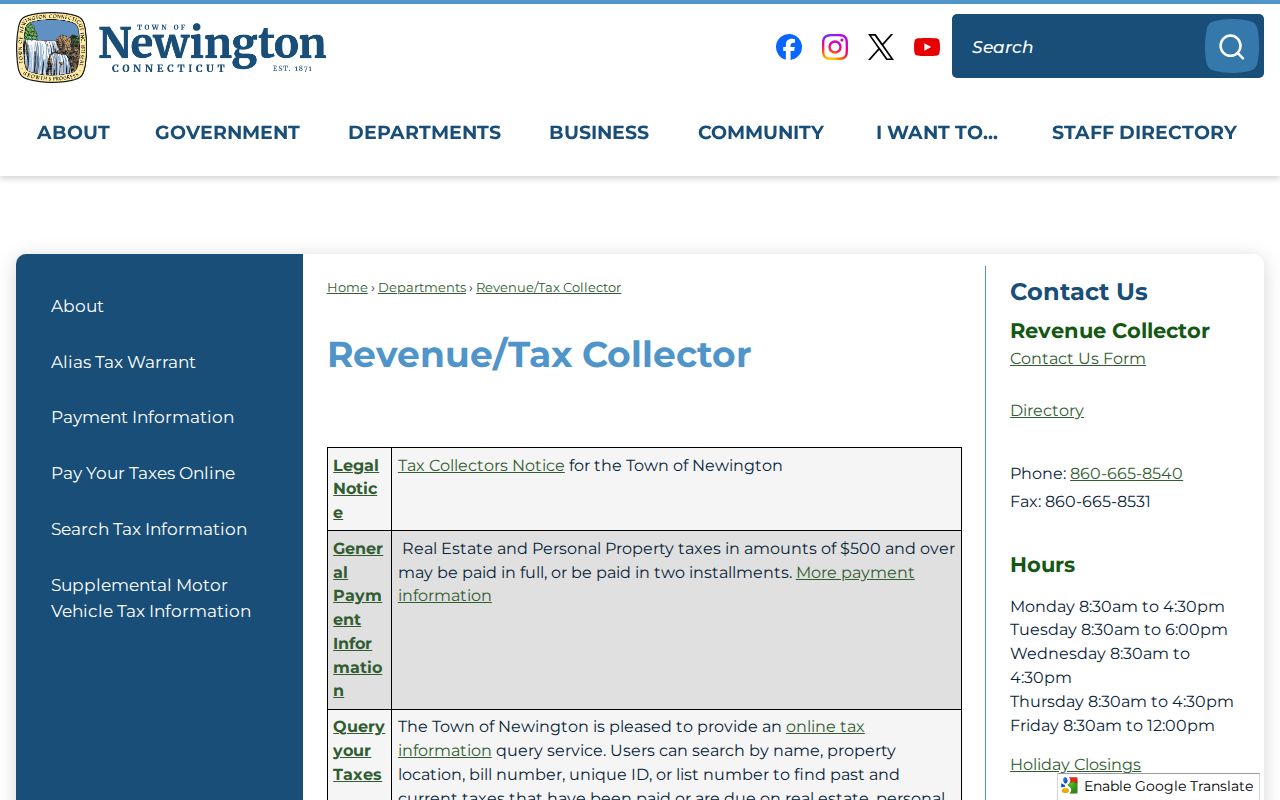
Newington is just one municipality's route. Another Connecticut town may label the same identifier differently or rely on a different vendor.
Connecticut Property Tax Exemptions and Special Valuation
Some municipal assessor cards list exemptions, use classifications, or special valuation entries. Common examples include veteran, elderly, agricultural, forest, open-space, and PA 490 indicators. A town makes them visible. The list is not a complete eligibility guide. A category appearing on a screen does not mean it applies to every parcel. The assessor's official notice controls how an owner asks about a specific entry. The current town instructions do the same.
Compare an assessment with a bill carefully. Keep the base assessment, the exemption or use-value notation, and the taxable figure distinct. An exemption may change the taxable amount. The parcel's recorded sale price and the assessor's underlying description may stay untouched. For a correction, ask which assessment year and field the town used. Retain the notice and card version too. Any comparison then refers to the same parcel and list.
Connecticut Property Tax Liens, Balances, and Releases
A delinquent balance, a recorded tax lien, and a foreclosure case are three separate events. In Connecticut, the tax collector holds current bill and payment status. The town clerk keeps land-record instruments. Superior Court handles the litigation. A tax bill showing money due does not prove a tax sale happened. A lien instrument also cannot show whether a later payment cleared the account.
For due diligence, write down the account's tax year and balance date. Then search the municipal land-record index for a lien and any recorded release. If the matter has reached court, confirm the docket and any later recorded conveyance. Do not treat a notice as a completed transfer. These steps keep Connecticut tax records from standing in for a full title history.
The Connecticut Superior Court civil inquiry can locate a public property case. Judicial Branch E-Services information links pending foreclosure sales plus a property-address search. A docket, a collector balance, and a recorded deed remain distinct sources. Confirm the case status and the final land-record instrument before calling a sale complete.
Municipal balances and payment status can shift after a query. Verify again with the collector before relying on a balance. Do not pay through a vendor page before that check.
Older Connecticut Assessment Cards and Grand Lists
Old assessor files give a dated window onto a parcel's past. They can show land and improvements, ownership labels, and changes to the parcel over time. The Connecticut State Library research portal describes these town-level holdings. Its notes list Norwalk tax abstracts from 1812–1814. Suffield tax records run from 1849 to 1969. Bethlehem property cards cover 1969–2003, and Sherman cards cover 1969–2008. Other local series appear there too. The lesson is simple. An online assessor card is not a complete statewide history of Connecticut property records.
Ask the town or library directly whether it holds a card, tax list, annual report, or abstract you need. A historic entry is a dated source only. It is not a current balance or proof of title. For ownership questions, trace the town clerk's recorded instruments instead.
Archival routes matter when a modern portal starts late. Many towns post only the present grand list online. A blank search result is not a gap in the parcel's history; it may just mean the earlier tax roll sits in a local index or collection. Ask before you conclude anything.
Check Connecticut Property Tax Balances
Most Connecticut real-estate tax bills come due July 1. Towns set their own installment schedules. A bill that never arrives does not excuse payment. Interest charges and collection practice differ from town to town. Check the live tax collector record on the date that matters. Do not carry forward a balance from an old bill or saved PDF. Note the tax year, installment, and parcel or account identifier the result covers.
No single public list gathers every delinquent Connecticut tax account. A local tax portal may show current bills, prior bills, payments, delinquency, or interest. But a bill account is not a full lien-priority search. When a lien matters, inspect the town-clerk land record and any release. A sale or foreclosure notice deserves verification. Confirm it with the tax collector, the court docket, and the recorded instrument. Delinquency alone proves neither a tax sale nor a title transfer.
Online payment vendors can charge service fees. Those fees and the accepted payment methods change with the local system. Follow the collector's current official page before paying. Describe any Connecticut tax balance, convenience charge, or installment status with an access date. Do not treat it as a permanent parcel fact.
Appealing a Connecticut Assessment
Connecticut's assessment law gives each municipality an appeal framework. No single filing date, form, or hearing calendar applies the same way across all 169 municipalities. Read the notice for the assessment year at issue. Follow the official instructions from that town's assessor or appeal body. If you doubt the figure, gather the card's details. Organize the parcel identifier, property class, and land and improvement components. Add the valuation year and any sale or building facts shown in the municipal record.
Use the current text of Chapter 203 as the statewide legal framework. Then confirm deadlines and filing requirements with the responsible municipality. An OPM revaluation-schedule entry is not an appeal deadline. Keep the submitted materials and the town's receipt or response with the parcel record. If the dispute reaches Superior Court, the public docket is a litigation record. It does not replace the assessment card or set a new value by itself. Label every municipal and court document by date and source.
Some assessor or collector records are not online. Connecticut's FOI Act guidance offers an offline route to inspect or request records a public agency already holds. No special statewide form is required, though a town may offer one. Municipal copy charges are generally capped at 50 cents per page. Large electronic, programming, or certified-copy requests can be treated differently. FOIC guidance suggests naming the municipality and the parcel address or local ID. Also list the record type, the date range, and the preferred format. An agency must provide prompt access, but the four-business-day response guidance is not a guaranteed production date for every large request. If access is denied, follow the Commission's published appeal instructions and keep both the request and the agency's response.
Check the town’s current appeal calendar. Connecticut’s statewide materials identify the legal assessment-appeal framework but do not establish a single verified date for every municipality. Use the assessment notice and official local instructions to confirm the correct filing deadline and destination before sending an appeal.