
Connecticut Deed and Land Instruments
Connecticut land records are a town affair. Each town or city-town clerk records deeds and maintains the local index. Look there and you get the parties, the document type, the recording reference and, when the filing states it, the property location. Deeds record transfers. Mortgages, liens, assignments and releases cover different land interests. Those entries may share the same land-record system, but a mortgage does not transfer ownership the way a deed does.
| Deed Type | What It Does | Common Use |
|---|---|---|
| Deed | Records a conveyance from grantor to grantee. | Identify the recorded transfer and follow its prior reference. |
| Fiduciary deed or estate transfer | May show property passing through an estate representative. | Check the capacity named and related probate record where available. |
| Mortgage | Records a secured interest tied to the described land. | Search with the owner, lender or nominee. |
| Assignment or release | Links a mortgage or lien to a later assignee or discharge record. | Follow book/page references and instrument dates. |
| Filed map or survey | Records a plan or map reference for described land. | Compare lot labels with the deed and parcel card. |
The list describes record roles you meet in Connecticut land-record research. It is not a statewide menu of every deed label. Whatever the instrument says controls the interest it conveys. A recorded entry proves what was filed, nothing more. It does not guarantee the status of unrecorded claims or other interests.
Connecticut Town Clerk Portal Coverage
There is no county deed index in Connecticut. The municipality where the property sits decides which clerk and which online vendor you use. The legacy Connecticut Town Clerks Portal lists towns moving to Cott's RECORDhub; other municipalities run on different vendor systems. The roster keeps changing. The town clerk's current page beats any stale portal bookmark.
Coverage dates vary town by town. Bethlehem reports index entries from June 8, 1937, images from January 1946, and maps, indexes and images from August 9, 1928. Redding reports online indexes and images from January 21, 1969. Another town may start far earlier or later. An index can also exist where images do not, so read each town's coverage note before assuming the chain stops.
The legacy portal's published schedule lists a free guest index without images, a $7.50 daily index-and-image plan, a $35 monthly plan, and $1 per image page. PayPal print or download adds a 5% service fee. Those are vendor charges, not town-certified-copy fees. The live schedule controls. RECORDhub purchases after transition use a credit card. The RECORDhub gateway is the shared destination for municipalities that have moved there, while each clerk's town-specific page stays the authority on local systems and coverage.
Pull the municipality name from the assessor or the deed first. Then check that town's clerk portal. A statewide vendor roster is not a statewide deed search.
Connecticut Grantor Grantee Index
Connecticut General Statutes § 7-25 requires every town clerk to enter grantors and grantees in alphabetical indexes, cross-indexed to the first identified party. Each entry captures the instrument's nature and date, the book/page or other approved location and, when the instrument states it, the property location. The general index is permanent and public. The statute allows five days after the clerk receives the instrument, and electronic indexing joins the grantor and grantee sides together.
The grantor transfers an interest. The grantee receives it. To walk the chain backward, locate the target deed under the current grantee, then take the preceding grantor and hunt that name as a grantee for the earlier acquisition. Confirm the property with the land description and reference. Names alone will mislead you.
- Search the assessor’s owner or the likely grantee name in the town clerk’s land-record index.
- Open the deed entry and note both parties, instrument date, recording date and book/page or document reference.
- Read the legal description and any prior-instrument reference; record the grantor’s name and stated capacity.
- Search that grantor as grantee in the earlier time range, checking spelling and entity variants.
- When online coverage ends, ask the clerk which paper, scanned or microfilm index continues the sequence.
- Grantor
- The person or entity transferring the interest described in the instrument.
- Grantee
- The person or entity receiving that interest.
- Chain of title
- The ordered set of recorded conveyances used to trace ownership back.
- Book/page or document number
- The clerk’s reference for locating the filed record; the format varies by system.
Connecticut Deed Index Fields
Vendor controls differ by town. Connecticut law fixes the grantor/grantee index structure. Search fields, party-role filters, date controls and image links vary across portals, though. Bethlehem and Redding describe land-record systems without exposing one statewide search form. Open the live town portal and work with the fields that actually appear.
| Party names and roles | Grantor, grantee, releasor, releasee, mortgagor, mortgagee or another instrument role. |
|---|---|
| Instrument type | Deed, mortgage, assignment, release, lien, map or another recorded item. |
| Recording date | Date the instrument was received or recorded in the index. |
| Record reference | Book/page or the document number used by that system. |
| Property location | Location included in the index when stated in the instrument; the deed carries the full description. |
| Image and links | Image availability, related assignment or release, and any redaction shown by the portal. |
Names get abbreviated or misspelled. An online image may not reach the whole indexed period either. Keep the reference even without an image; the clerk can pull the paper or microfilm volume from it.
Reading the Latest Connecticut Deed
The assessor's newest owner field is a lead, not gospel. The newest recorded grantee may differ, because a deed can reach the town clerk before the assessor roll refreshes, and the public owner field can carry an earlier update date. Put the latest deed's recording date, grantor and grantee beside the assessor card's date, parcel key and legal description.
A sale price, where shown, is not a value conclusion. The instrument's land description controls the match. Trusts, fiduciaries, companies, survivorship and court-related transfers can bend the name trail; read the party capacity and check the cited proceeding or entity record when it matters. For the address-to-parcel workflow, use Connecticut property search, then return to the clerk record to confirm the transfer.
Connecticut Deed Chain Gaps
A name search that skips a transfer rarely means the deed is missing. Run both sides of the index again. Try surname-first, then initials, then married or former names. Add trustee capacity and variant entity spellings too. What looks like a gap in an owner-to-owner chain often branches through a probate estate, a foreclosure, a merger, or a survivorship instrument. The deed's prior reference, legal description, and date will separate a true match from a same-name record for different land. For every link in the chain, write down the source, date, parties, reference, and the description tying it to the parcel. An index result with no image has three possible explanations: the document is not online, it falls outside the image range, or it sits in an older volume. The clerk can tell you which. A good chain notes the search evidence and any gap, because a bare list of names proves nothing about what interests were actually reviewed.
Historic Connecticut Deed Books
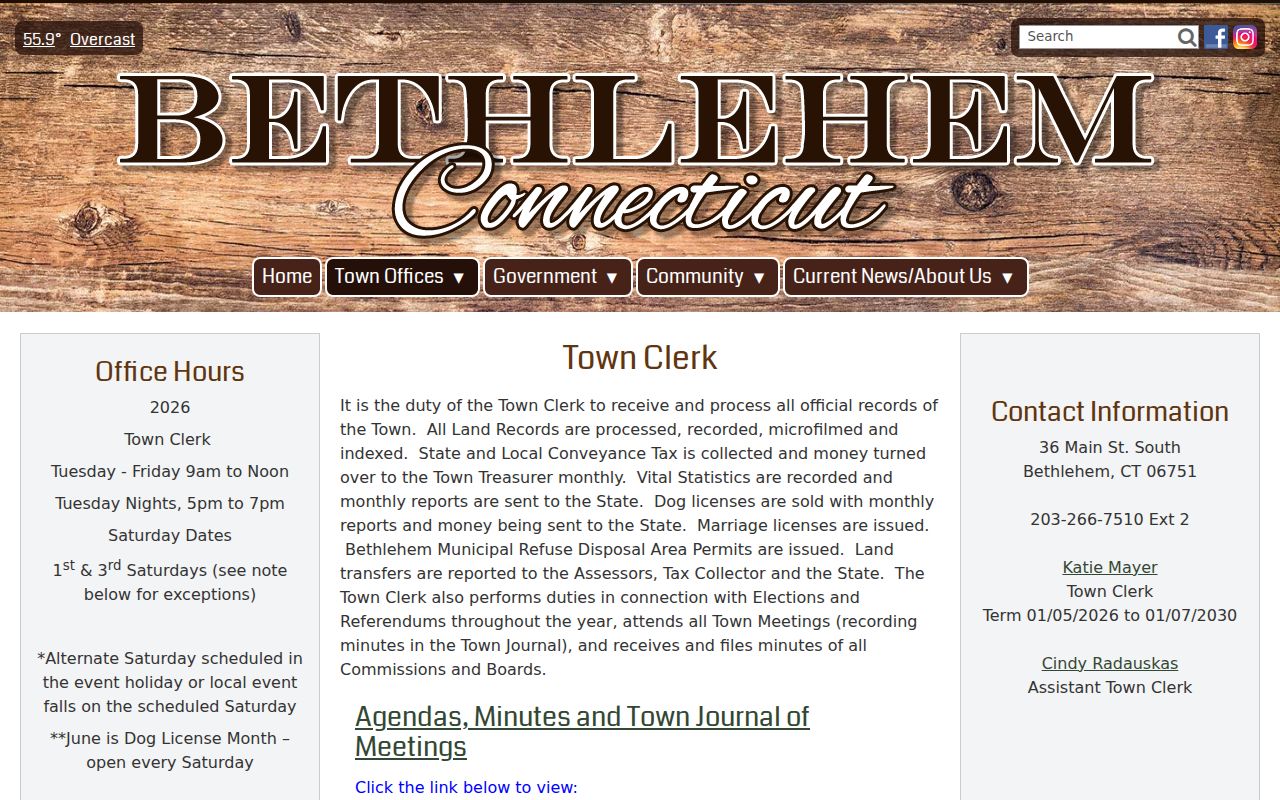
Connecticut land records begin long before any digital cutoff. Town clerks keep paper deed books and indexes. Preservation rules call for microfilm duplication of older volumes. The State Library's 2023 land-record memorandum sets a preservation rhythm: a daybook entry within 24 hours, indexing within five days, and recording within 30 days. Those numbers describe the memorandum's workflow. They are not a promise that a modern portal posts on that schedule. The State Archives guide identifies early deed and land-record material dating from 1640 through 1846, though holdings vary by town and record group. The State Library also documents town-specific historic assessments and tax abstracts. Examples include Norwalk tax abstracts from 1812–1814, Suffield tax records from 1849–1969, and Bethlehem property cards from 1969–2003. A local card or tax list can bridge an address change nicely. Still, these are samples, not a statewide inventory. The Bethlehem Town Clerk page shows the town's separate index, image, and map coverage, along with routing details for requests.
Ask the clerk in the property's own town for its earliest index, map book, and image dates. Applying another town's cutoff to a different town will mislead you.
Connecticut Deeds, Mortgages and Releases
A deed search does not stand alone. Mortgages, assignments, liens, easements, restrictions, and releases can all encumber the same parcel. Search the owner as both grantee and grantor. Bring in a lender, nominee, or claimant whenever a record points to one. Connecticut law generally requires a clerk who records an assignment or release of a mortgage or lien to note the related book and page on the original instrument's first page. An exception applies when electronic indexing makes the manual note unnecessary. Follow a release reference forward to the later record. Check its parties, parcel description, and date. A notation helps you find the related entry. It does not establish that every debt or claim was resolved. The Connecticut land-record statutes set the indexing framework. When an online result seems thin, ask the clerk about the paper index. If the outcome affects a transfer or refinancing, consult a title professional before acting.
Connecticut Deed Copies and Verification
A recorded deed image may sit in the town's portal. If it does not, contact the clerk who holds the record. Town pages describe counter access, phone guidance, and written requests. Supply the book and page or document number if you have it, plus the town, parties, and approximate record date. The clerk can explain whether an index result has an online image, whether a paper or microfilm volume must be checked, and what copy format is offered. Copy costs and portal charges are separate items. Connecticut's town-clerk statute lists a $1-per-page copy and a $2 certification charge. The clerk's certification attests that the copy matches the filed record. Survey and map copies carry a different cost basis. The legacy portal's published charges include free guest index access without images, per-image fees, and time-limited index and image plans. Transitioned systems set their own rates. Check the current statutory supplement and the live vendor before ordering. These are copy and access costs, not one flat recording fee.
Recorded, not guaranteed. A Connecticut deed index shows recorded entries, not every possible interest or a legal opinion on title. Match the instrument to the parcel and consult a qualified title professional when legal reliance requires a complete examination.